
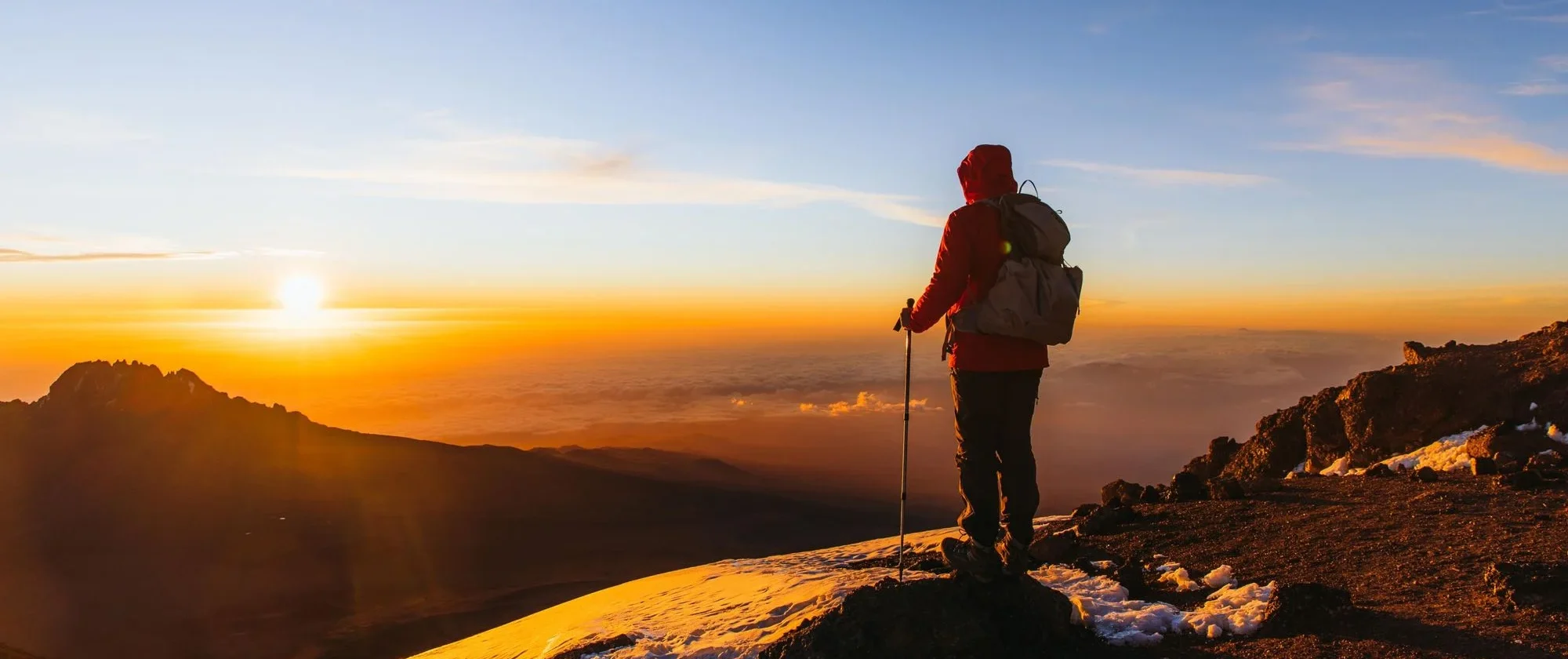
Kilimanjaro's summit sits at 5,895 metres. The body needs time to produce more red blood cells and to adjust fluid balance and breathing at reduced oxygen pressure. Much of what people call altitude sickness is simply the body working harder.
Climb profile matters more than total days
A six-day climb is not automatically safer than an eight-day climb. What matters is how quickly you gain sleeping altitude. Routes with a high camp followed by a lower one — Lemosho, Machame and the Northern Circuit all do this — are more forgiving.
If you sleep higher and wake higher each day with little opportunity to drop, you have less recovery built into the plan. Talk to your guide about the profile, not just the day count.
Slow down, and climb while unwell
The single most effective step is to lose height. A guide will bring climbers down to a lower camp when symptoms appear, and serious cases are evacuated. This happens and it is treated as a normal part of climbing, not a failure.
Climbing steadily but slowly, with real rest, prevents most cases. Fitness helps enormously with how you feel, but fitness does not protect you from altitude.
Practical habits that help
Drink plenty of water, and more than you think you need. Aim for several litres a day. Avoid alcohol and strong sleeping tablets at altitude, and eat more carbohydrates than usual.
Keep the day flexible. Walk slowly, take breaks, and expect to need longer than you planned for every stage.
Recognising the serious signs
Warning signs that need immediate attention include a walk that becomes unsteady, confusion, breathlessness at rest, a severe headache that does not respond to painkillers, or repeated vomiting.
Any Kilimanjaro operator should carry a pulse oximeter, a first aid kit and a descent plan, and should have a clear evacuation procedure. Ask about this before you book, not on day two of the climb.