
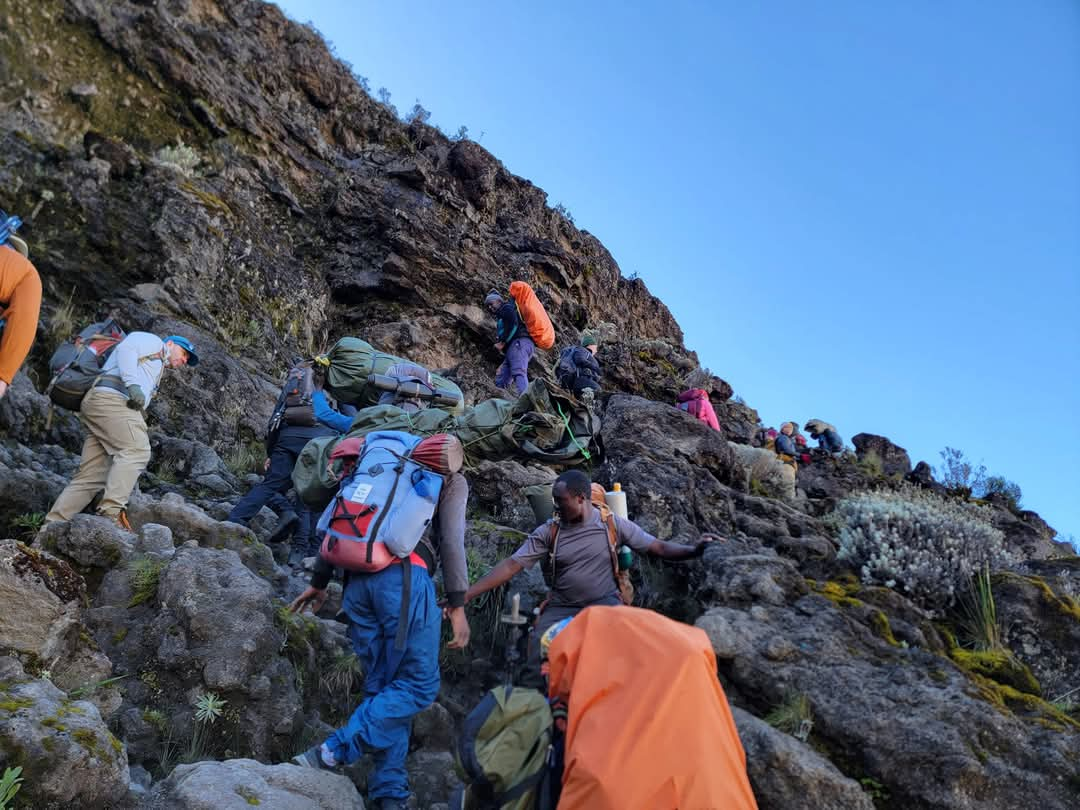
Summit day is the hard part: starting around midnight, carrying a sleeping bag and water in the cold and dark, and walking for ten to fourteen hours. That demands leg endurance, core strength and mental toughness more than raw speed.
A six-week plan
Weeks one and two: three cardio sessions a week, thirty to forty minutes each, plus two strength sessions focusing on squats, lunges, step-ups, calf raises and a strong core. Build the habit before you build the volume.
Weeks three and four: extend to one longer walk of ninety minutes to two hours with a loaded pack. Add hill repeats, and aim to have a full rest day in the week.
Weeks five and six: two long hikes with a backpack, one weekend walk on steep ground, and a genuine taper — less volume, same effort per session, so you arrive fresh.
Hiking with a loaded pack
A pack of eight to twelve kilograms on hilly ground is a reasonable approximation of what you will carry on Kilimanjaro. Train with weight. Poor technique under load causes most injuries on the mountain, not weakness.
If you can, walk one long hike wearing the boots and carrying the daypack you intend to use. Blisters come from new gear, not from fitness.
Core and stability
Carrying a heavy pack uphill and downhill loads the lower back. Planks, side planks, single leg balances, step-ups and hip hinges all help, and they matter more on the descent than the ascent.
Twice a week is enough for most people. Consistency over the six weeks beats heroics in the last fortnight.
The last two weeks
Stop adding distance. Keep the sessions short and stop trying to peak. The biggest mistake is arriving at the trailhead exhausted from a training block that ended three days ago.
Also sort gear now: broken-in boots, layered clothing, gloves and a warm hat for summit night, trekking poles, headtorch with spare batteries, and a sleeping bag rated well below the temperatures you will meet.